Empowering Education Through Visual Storytelling: The Role of Scholarship Teamwork and Learning Access
In the rapidly evolving landscape of modern education, the ability to communicate complex ideas quickly and effectively is paramount. Whether you are running a university admissions office, managing a student funding campaign, or developing an e-learning platform, visual assets play a critical role in capturing attention and conveying value. This is where high-quality vector illustrations focused on Scholarship Teamwork and Learning Access become indispensable tools for educators, marketers, and designers alike.
The journey of a student—from seeking financial relief through scholarships to collaborating with peers on academic projects—is rich with narrative potential. Illustrations that depict this journey do more than just decorate a webpage; they validate the experiences of learners and highlight the systemic support structures that make education possible. By utilizing specific imagery such as teamwork organizing books, graduation ratings, and digital application processes, organizations can create a cohesive visual language that resonates with their audience.
The Power of Collaborative Imagery in Academic Settings
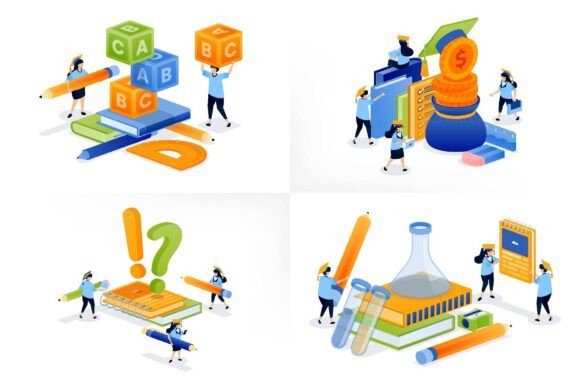
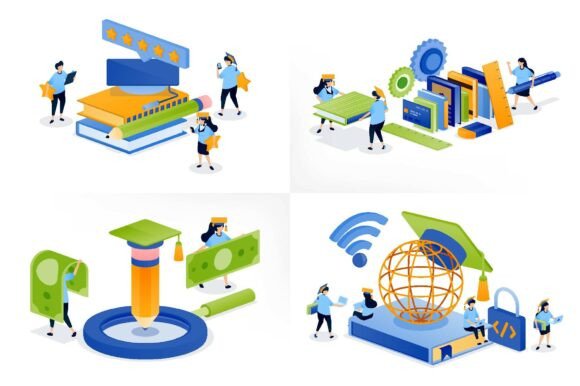
Education is rarely a solitary endeavor. At its core, learning is a social activity built on collaboration, shared resources, and mutual support. Illustrations depicting students working together—specifically scenes showing teamwork organizing books and stationery for collaborative learning—serve as powerful metaphors for the collective effort required to achieve academic success.
When designing materials for educational platforms or school marketing campaigns, these visuals help humanize the institution. Instead of sterile stock photos of empty classrooms, dynamic vector art showing students stacking books, sharing notebooks, and engaging in group study creates an atmosphere of community. This is essential for promoting Scholarship Teamwork and Learning Access, as it suggests that financial aid is not just about individual gain but about fostering a supportive environment where everyone contributes to the whole.
Consider the practical application of these images in a student funding campaign. A graphic showing diverse hands arranging stationery or sorting through textbooks can symbolize the organization and planning involved in securing a scholarship. It tells a story of preparation and diligence, qualities that scholarship committees value highly. Furthermore, these images are versatile enough to be used in social media ads, presentations, and literacy organization brochures, ensuring a consistent message across all channels.
Visualizing Success: Graduation Ratings and Academic Achievement
While the process of learning is vital, the outcome is what drives many students to pursue higher education. Illustrations featuring graduation ratings with stacked student books offer a tangible representation of achievement and progression. These visuals are particularly effective for university promotions and academic collaboration tools, where demonstrating excellence is key.
The imagery of stacked books often symbolizes the accumulation of knowledge, while graduation caps or rating icons overlaying these stacks represent the validation of that hard work. In the context of Scholarship Teamwork and Learning Access, these graphics can illustrate the trajectory from receiving aid to achieving top-tier results. They serve as aspirational goals for prospective students, visually reinforcing the idea that with the right support systems in place, academic excellence is attainable.
For designers creating content for e-learning services, these elements provide a clear visual hierarchy. A section on "Student Success Stories" might utilize a gradient of book stacks growing taller, culminating in a graduation icon, to show progress over time. This approach makes abstract concepts like "academic growth" concrete and easily digestible for viewers scanning a website or reading a report.
Bridging the Gap: Digital Applications and Financial Relief
One of the most significant barriers to education remains financial instability. Consequently, the theme of scholarship seeking for financial relief is central to modern educational discourse. However, the process of applying for these funds has undergone a massive transformation thanks to technology. Modern illustrations must reflect this shift by incorporating elements of internet-based applications and digital workflows.
Visuals that combine traditional academic symbols with modern technology—such as a laptop displaying a scholarship portal next to a stack of grant documents—effectively communicate efficiency and accessibility. These images reassure applicants that the path to funding is streamlined and user-friendly. They address a common anxiety among students: the fear that the application process will be too cumbersome or opaque.
By highlighting internet based applications enabling efficient modern education access, these graphics align with the values of transparency and innovation. For organizations launching new scholarship programs, using these specific vector assets can significantly improve conversion rates. A clean, modern illustration of a student successfully submitting an online form conveys trust and ease, encouraging more users to take the first step toward financial relief.
This integration of digital themes is crucial for Scholarship Teamwork and Learning Access initiatives. It signals that the institution is forward-thinking and committed to removing barriers through technology. Whether used in an app interface, a webinar slide, or a digital ad, these visuals bridge the gap between the need for funding and the solution provided by the program.
Technical Flexibility: Maximizing Your Vector Assets
The true value of a professional illustration collection lies in its adaptability. The included files—EPS, SVG, PNG, and JPG formats—are designed to fit seamlessly into various creative workflows. Understanding how to leverage these formats ensures that your educational content looks professional across every medium.
How to Use the Files Effectively:
- Opening and Editing: Start by opening the EPS or SVG file in your preferred design software, such as Adobe Illustrator, CorelDRAW, or Inkscape. These vector formats allow you to adjust colors to match your brand guidelines, modify stroke thickness for better legibility on mobile screens, or rearrange shapes to fit unique layouts.
- Scalability for Web and Print: The SVG format is ideal for web use, ensuring that illustrations remain crisp on any device resolution without increasing page load times. Conversely, the EPS file is perfect for high-resolution print materials like brochures, posters, and banners.
- Flexible Placement: The PNG files come with transparent backgrounds, making them easy to drop onto existing designs without the need for complex masking. This is particularly useful for quick updates to social media posts or presentation slides.
- Quick Reference: The JPG preview allows stakeholders to review the concept before committing to the final design process, streamlining approval workflows.
This flexibility is essential when creating materials for diverse audiences. A university promotion might require a bold, colorful version of the "teamwork organizing books" illustration for a billboard, while an e-learning service might prefer a minimalist, monochrome version for a mobile app interface. The ability to customize these assets means you don't have to commission new artwork for every single project.
Integrating Illustrations into Modern Workflows
Incorporating these visuals into your projects goes beyond simple decoration; it enhances the overall user experience. When users encounter consistent, high-quality imagery related to Scholarship Teamwork and Learning Access, they develop a stronger emotional connection to the brand or institution.
For example, an academic collaboration tool could use the "stacked student books" graphic as a loading screen animation, reinforcing the theme of building knowledge. A literacy organization might use the "digital application" illustration in their email newsletters to guide donors and students through the funding process. The versatility of these assets allows them to function as both navigational aids and storytelling devices.
Moreover, these illustrations support the principles of inclusive design. By depicting diverse groups of students and universal symbols of learning, they ensure that the message of educational opportunity reaches a broad audience. This inclusivity is a cornerstone of modern educational strategy, reflecting a commitment to equity and access for all learners.
Strategic Benefits for Educational Institutions
Investing in a comprehensive set of education-focused illustrations offers long-term strategic benefits. For scholarship programs, having a library of ready-to-use assets reduces the time and cost associated with graphic design. It allows administrative staff to focus on the core mission of supporting students rather than struggling to find appropriate imagery.
Furthermore, these visuals help standardize communication across different departments. Whether it's the admissions team, the financial aid office, or the student affairs division, using a unified visual style creates a cohesive brand identity. This consistency builds trust with prospective students and their families, who are often navigating a confusing landscape of options and requirements.
Ultimately, the goal of Scholarship Teamwork and Learning Access is to empower individuals to reach their full potential. By utilizing illustrations that accurately and beautifully represent this journey, institutions can inspire confidence, clarify complex processes, and celebrate the achievements of their student body. From the initial search for financial relief to the final moment of graduation, these visual stories remind us that education is a shared triumph.